Blueprint Sciences Blog
The latest research insights, protocols, and news from the molecular science community.
Editor's Picks

BPC-157 Benefits: What the Research Shows
Search for BPC-157 and you’ll find bold claims about healing, recovery, and repair almost everywhere. The research behind those claims is real, but it’s…
By Blueprint SciencesAug 11, 2026
What Is BPC-157? Mechanism, Research & Uses
BPC-157 has built a reputation as the go-to peptide for tissue repair research, showing up constantly in discussions about tendons, ligaments, and gut…
By Blueprint SciencesAug 11, 2026
Ipamorelin Benefits: What the Research Examines
Ipamorelin shows up constantly in growth-hormone-focused research circles, usually described as the “cleaner” alternative to older growth hormone…
By Blueprint SciencesAug 11, 2026
All Articles

BPC-157 Dosage & Reconstitution Research Guide
BPC-157 is typically supplied as a freeze-dried peptide that needs to be reconstituted before it can be used in a study. This guide covers how dosing…
BPC-157 Benefits: What the Research Shows
Search for BPC-157 and you’ll find bold claims about healing, recovery, and repair almost everywhere. The research behind those claims is real, but it’s…
What Is BPC-157? Mechanism, Research & Uses
BPC-157 has built a reputation as the go-to peptide for tissue repair research, showing up constantly in discussions about tendons, ligaments, and gut…
Ipamorelin Benefits: What the Research Examines
Ipamorelin shows up constantly in growth-hormone-focused research circles, usually described as the “cleaner” alternative to older growth hormone…
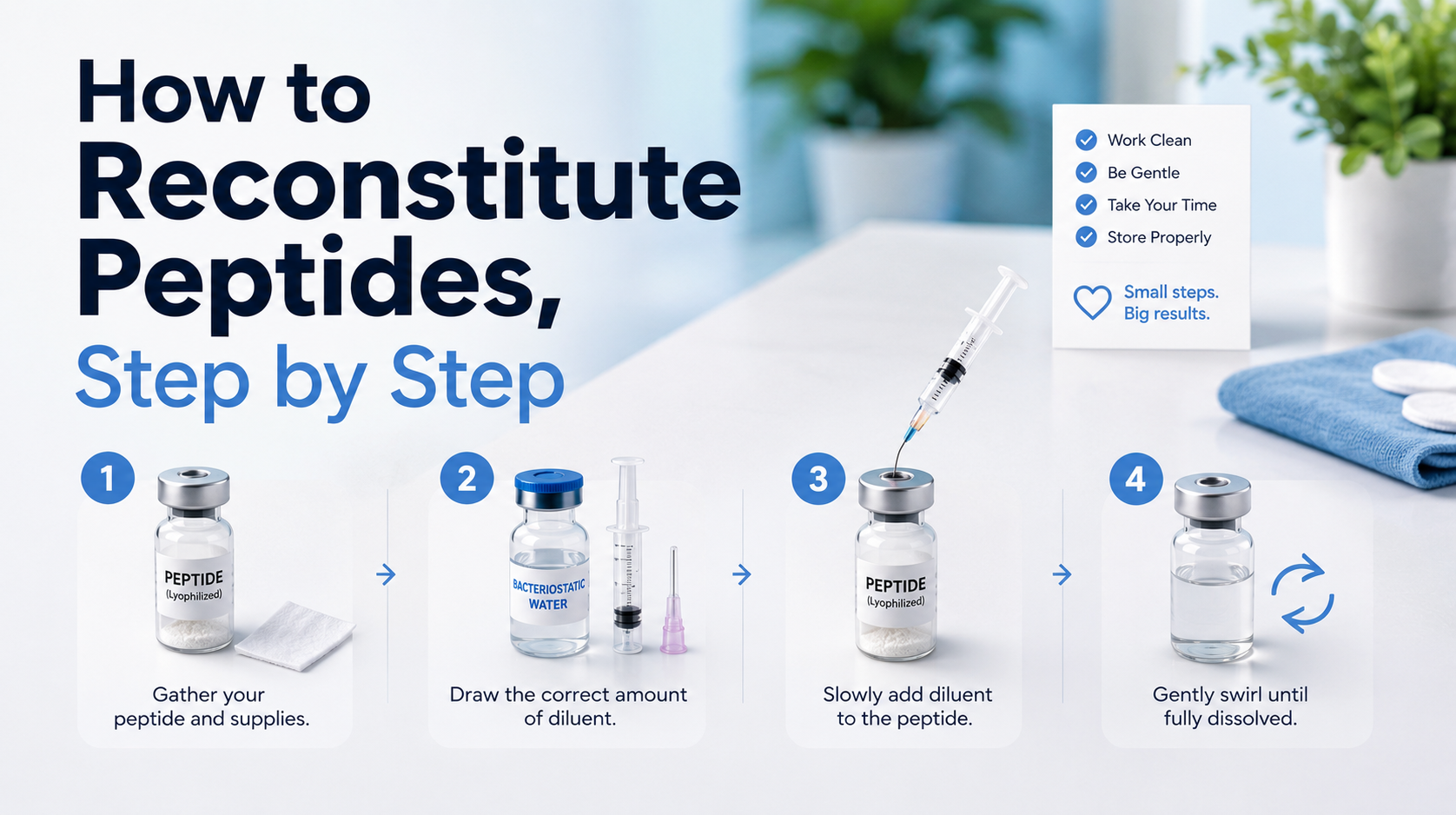
How to Reconstitute Peptides, Step by Step
Mixing a peptide the wrong way is one of the easiest mistakes to make in a lab — not because it’s hard, but because small slip-ups add up fast. This guide…
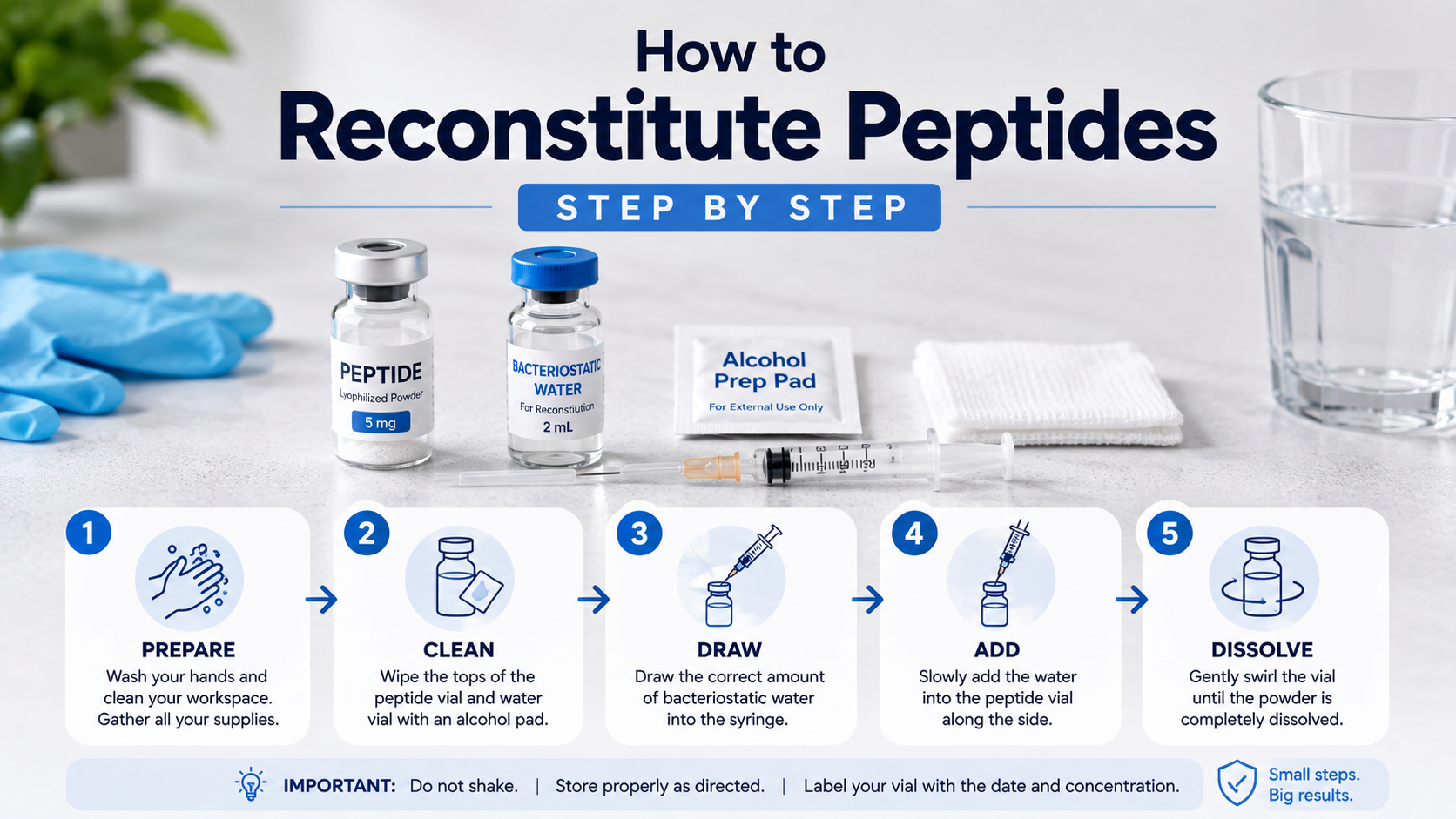
Peptide Reconstitution Ratios & How to Calculate Them
The math behind mixing a peptide looks easy once it’s written down — but it’s also where small mistakes sneak in. Get one number wrong, and every…
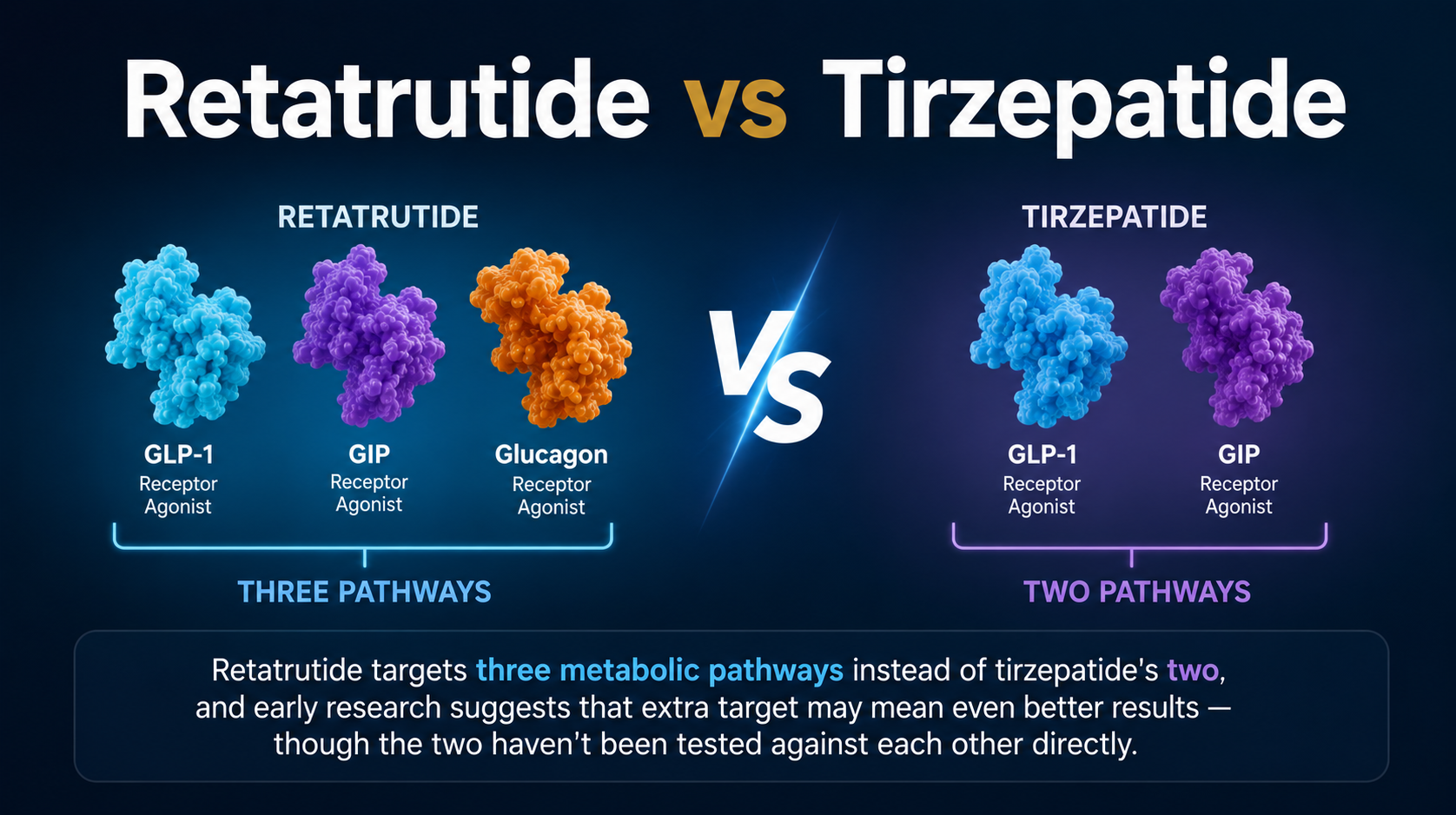
Retatrutide vs Tirzepatide: What Sets Them Apart
Two hormone receptors got tirzepatide into pharmacies. Retatrutide is betting a third one gets it further. That’s the entire rivalry in one sentence — but…

What Is Retatrutide? Mechanism, Research & Uses
Retatrutide (also known by its development code LY3437943) is one of the most closely watched investigational compounds in metabolic research today. It…

Retatrutide Dosage & Reconstitution Research Guide
Retatrutide usually arrives as a freeze-dried powder that needs to be mixed into a liquid before it can be used in research. This guide walks through…

Where to Buy Retatrutide for Research (2026 Guide)
Retatrutide is popular enough right now that it’s easy to find dozens of sellers with a quick search. The tricky part isn’t finding a listing — it’s…

MK-677 Benefits: What Current Research Shows
MK-677 (ibutamoren) gets discussed alongside injectable growth hormone secretagogues like ipamorelin constantly, but it’s built differently — it’s a…

MK-677 Dosage: How Researchers Approach It
MK-677’s dosing story looks different from the peptides covered elsewhere in this series, mostly because it isn’t a peptide at all. As a small molecule…

GHK-Cu Benefits: What the Research Examines
GHK-Cu might be one of the best-supported peptides covered in this series so far — and unlike most research peptides, it isn’t starting from scratch in…

GHK-Cu Dosage & Reconstitution Research Guide
GHK-Cu is typically supplied as a freeze-dried peptide, the same way most research peptides are, and needs to be reconstituted before it can be used in a…

TB-500 Benefits: What Current Research Shows
TB-500 gets talked about as a recovery peptide almost as often as BPC-157, usually in the same sentence. The research behind it starts from a naturally…
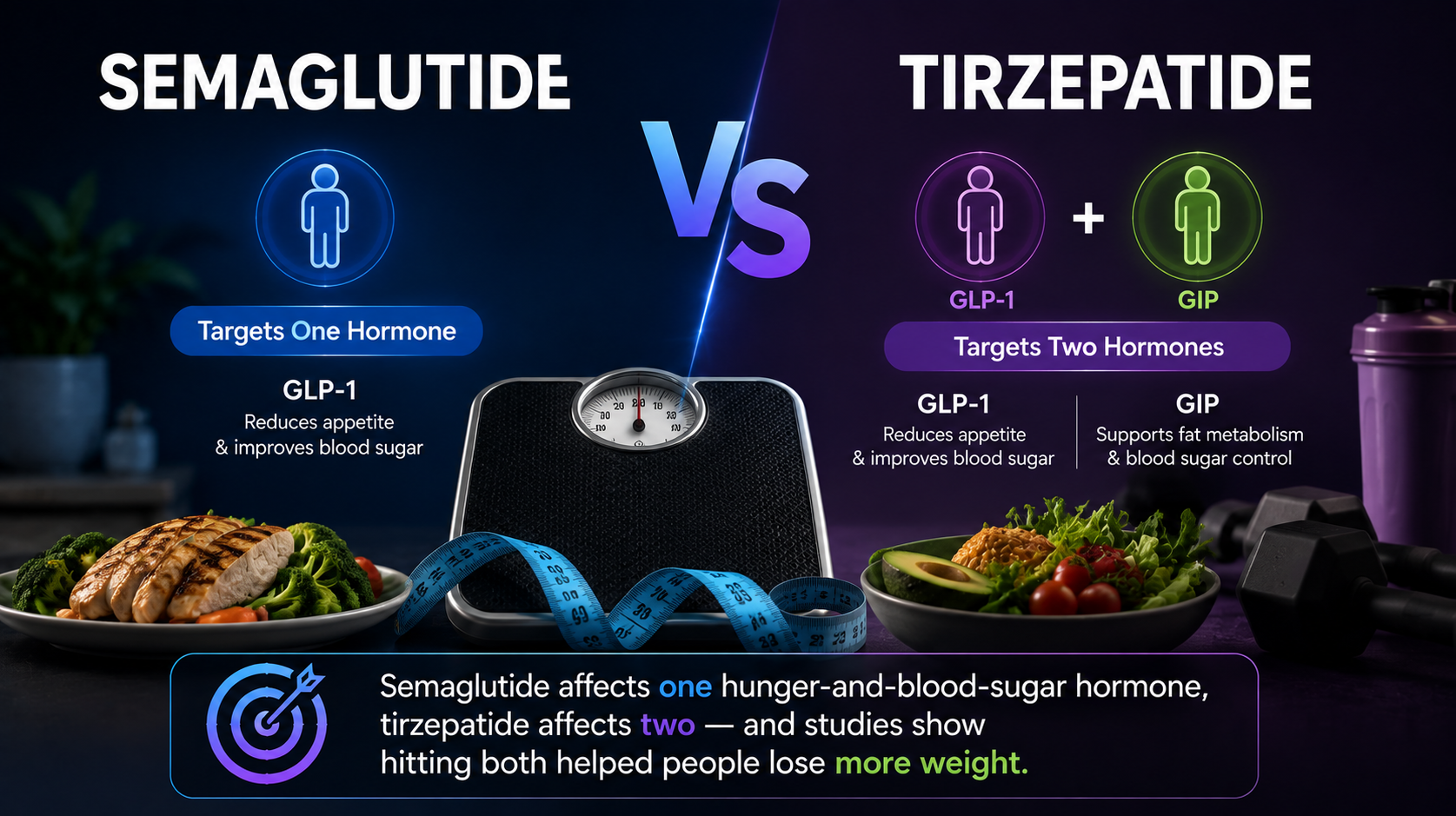
Semaglutide vs Tirzepatide: How They Compare
Ask around in metabolic research circles which peptide is “better,” and you’ll get strong opinions fast. Semaglutide and tirzepatide are the two biggest…

TB-500 Dosage & Reconstitution Research Guide
TB-500 is typically supplied as a freeze-dried peptide, the same way BPC-157 and most other research peptides are. But when it comes to dosing, TB-500 is…
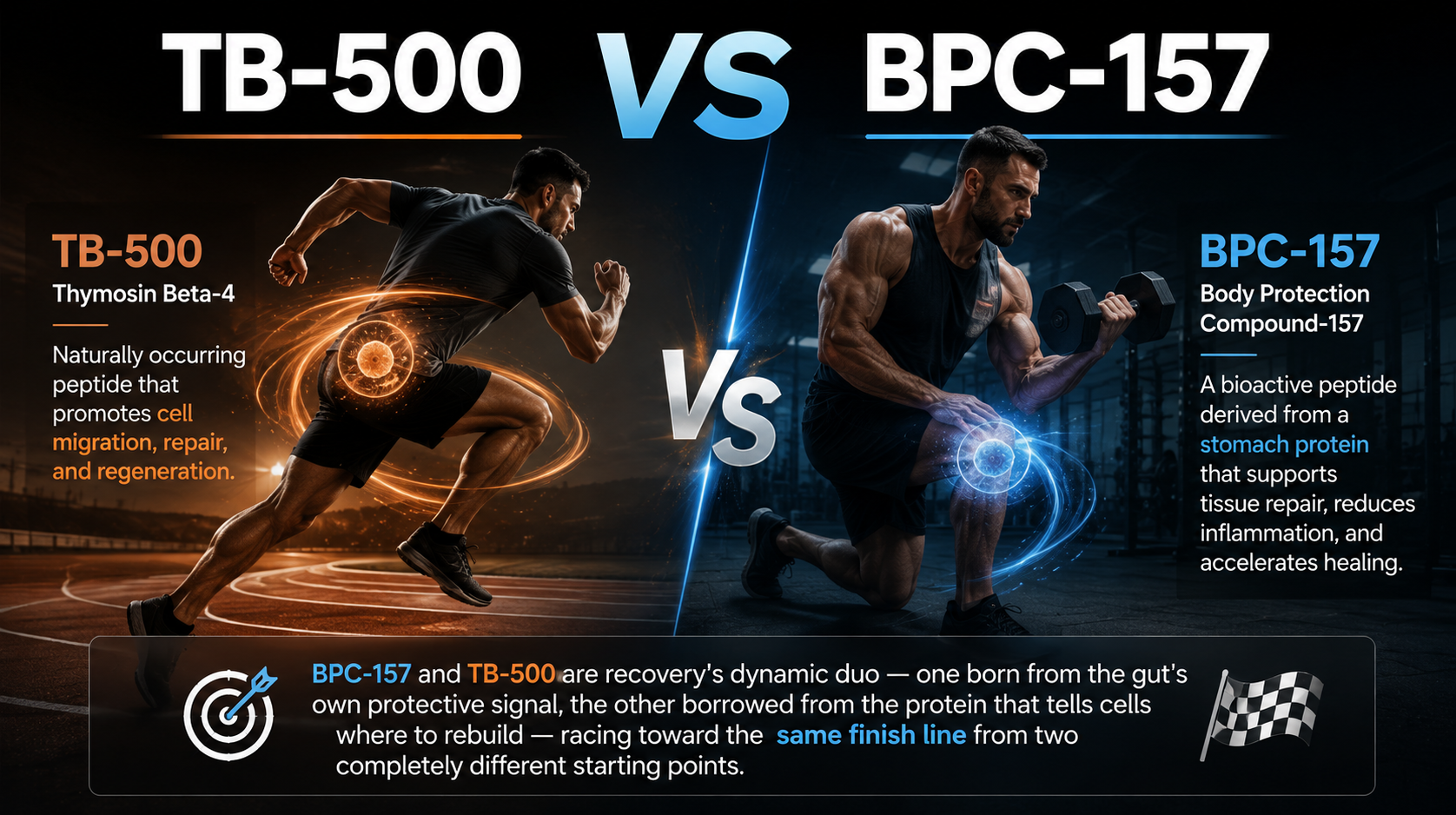
TB-500 vs BPC-157: How Researchers Compare Them
If BPC-157 is the gut-derived peptide that took over recovery research, TB-500 is the one that got there from an entirely different direction — not from…

Tirzepatide Dosage & Reconstitution Research Guide
Tirzepatide is sold as a research peptide in freeze-dried form, which means it needs to be mixed into a liquid before it can be used in a study. This…

What Is Tirzepatide? Mechanism & Research Explained
Tirzepatide is a peptide that works on two hormone pathways at once instead of just one, which is why it’s usually described as a “dual agonist.” It’s…

Why Appetite Is a Bigger Research Puzzle Than Anyone Expected
A Problem That Looked Simple From the Outside For a long time, appetite regulation research operated on a fairly simple working assumption: find the one signal that tells the brain “stop eating,” target it, and the rest would follow. It’s an intuitive starting point — appetite feels like a single sensation, so it seemed reasonable [...]

From Steroids to Peptides: How Muscle Research Evolved
A Different Kind of Research Question For most of the 20th century, muscle-building research had a fairly blunt instrument: anabolic steroids. The research question was straightforward — flood the system with synthetic testosterone analogs and study the downstream effects on muscle tissue. It worked, mechanistically, but it also came with a well-documented list of systemic [...]

How Peptides Took Over the Skincare Industry
The Fastest Ingredient Takeover in Beauty Skincare doesn’t usually move fast. Retinol took decades to go from dermatology offices to drugstore shelves. Vitamin C had a similarly slow mainstream climb. Peptides did something different — they went from a niche, science-forward ingredient category to a shelf staple across nearly every price tier in a fraction [...]

Why Muscle-Building Peptides Are the Fitness Industry’s Next Frontier
Fitness Culture’s Next Obsession For decades, the performance and bodybuilding world ran on a familiar toolkit: protein powders, creatine, pre-workouts, and a rotating cast of supplement trends. That toolkit is starting to look incomplete to a growing segment of the fitness research community, who’ve turned their attention toward a category that used to live almost [...]

The Next Chapter Beyond Weight Loss Drugs
The Story Everyone Already Knows For the past few years, the headline has been simple: GLP-1 drugs changed the conversation around metabolic health, and single-target peptides became a cultural phenomenon almost overnight. That story has been told a hundred times. It’s also, from a research standpoint, already outdated. While the public conversation is still catching [...]

The Molecule With Three Jobs: How Retatrutide Rewrote the Rules
One Molecule, Three Targets For most of the last decade, peptide design followed a simple rule: one molecule, one job. A compound was built to hit a single receptor, do its one thing, and that was the whole design brief. Retatrutide broke that rule. It’s engineered to hit three separate receptors — GLP-1, GIP, and [...]

The Longevity Compounds Getting the Most Research Attention Right Now
Aging research used to be a niche academic corner. That’s no longer true. Over the past several years, longevity science has pulled in attention from metabolic researchers, cell biologists, and pharmaceutical pipelines that historically had nothing to do with aging as a field. The result is a research landscape with far more active compound categories [...]

Why Peptides Are Becoming Part of the Women’s Longevity Conversation
For years, peptide research culture skewed heavily toward one audience: male biohackers optimizing performance and body composition. That’s changed. Over the past couple of years, peptides have started showing up in a completely different conversation — women’s longevity and wellness — driven largely by telehealth platforms and longevity clinics that didn’t exist five years ago. [...]