BPC-157 has built a reputation as the go-to peptide for tissue repair research, showing up constantly in discussions about tendons, ligaments, and gut healing. It’s also one of the more misunderstood compounds in this space — widely available as a research chemical, banned in competitive sports, and still working with a surprisingly thin human evidence base compared to how often it gets talked about.
This article covers what BPC-157 actually is, the mechanism researchers propose for it, what tissue-repair research has actually examined, how it compares to another popular repair-focused peptide (TB-500), and what its research-use form is meant for.
BPC-157 at a Glance
- What it is: A synthetic 15-amino-acid peptide, based on a fragment of a protein found in human gastric juice — “BPC” stands for “body protection compound.”
- Structure: Small enough and stable enough to survive intact in gastric juice for over 24 hours, which is part of why it drew early scientific interest.
- Regulatory status: Not approved by the FDA for any use. Banned by the World Anti-Doping Agency since 2022. A handful of countries, including Australia and New Zealand, classify it as prescription-only — despite there being no legitimate prescription product to actually prescribe.
- Where most of the evidence comes from: Animal and lab-based (preclinical) studies, not human clinical trials.
That last point is worth sitting with: a lot of what gets said about BPC-157 online is extrapolated from rodent studies and cell-based research, not from evidence in people.
On July 24, 2026, the FDA’s Pharmacy Compounding Advisory Committee — a panel whose roster had recently added several members with ties to the peptide industry — voted 8–6, with one abstention, in favor of recommending BPC-157 for inclusion in compounded prescriptions. That recommendation caps a reversal that began when HHS Secretary Robert F. Kennedy Jr., who has called himself a “big fan” of peptides, moved earlier in 2026 to remove BPC-157 and TB-500 from an FDA list that had flagged them in 2023 as too high-risk for pharmacy compounding. Not everyone on the committee was convinced: FDA staff scientists used the same meeting to flag that the five BPC-157 studies under review were short in duration, small in sample size, and relied on doses “likely exploratory in nature.” Because the vote is advisory rather than binding, BPC-157’s regulatory status hasn’t actually changed — it remains unapproved, and the FDA has yet to issue a final ruling. Still, the direction of travel is clearly toward more legal access than the compound has had before.
The Proposed Mechanism
Researchers studying BPC-157 have proposed a few overlapping mechanisms, though none of them are considered fully settled:
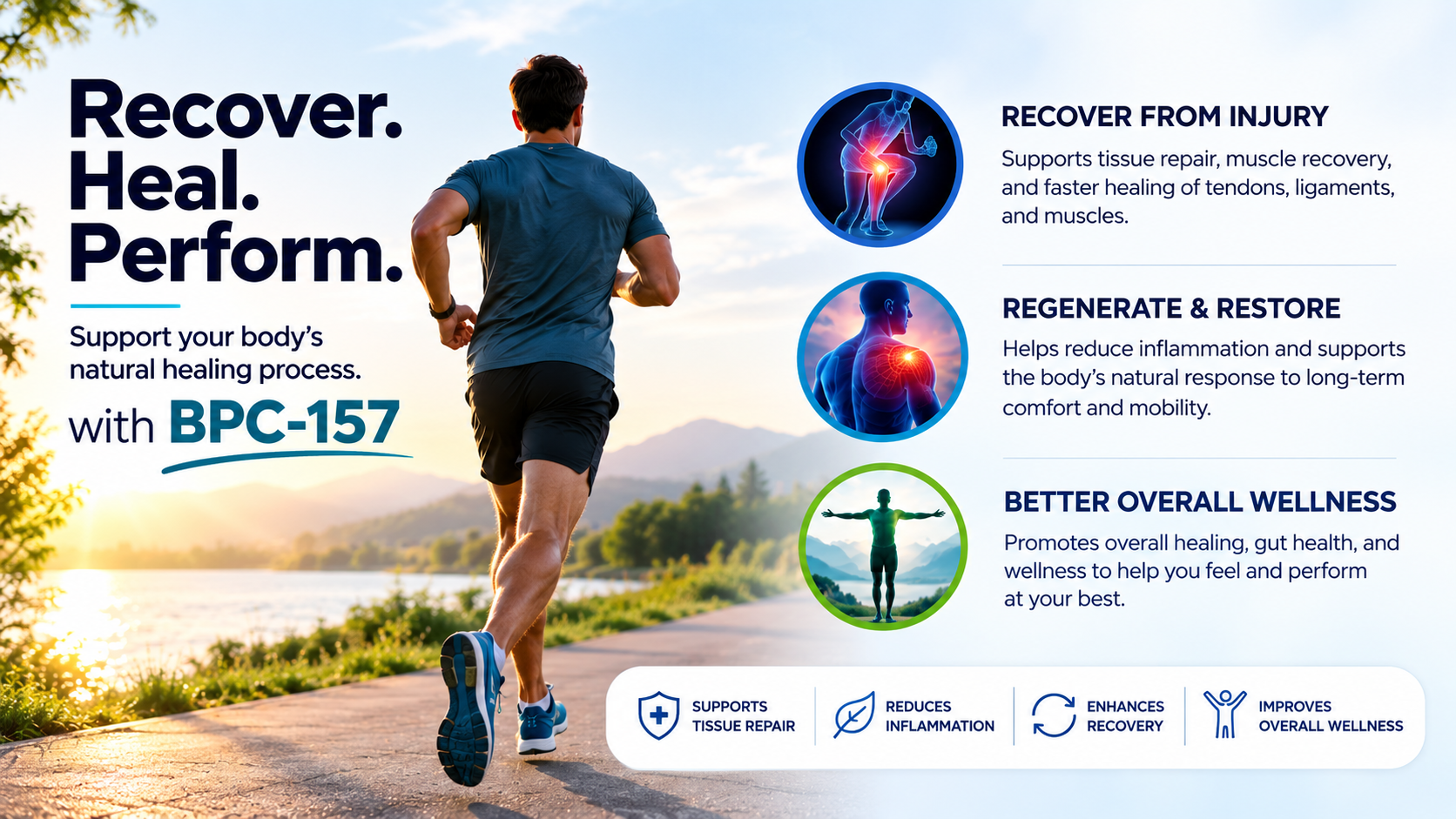
- Angiogenesis. BPC-157 appears to promote the formation of new blood vessels in preclinical models, which would theoretically support faster healing by improving blood supply to damaged tissue.
- Cytoprotection. Some research suggests it protects cells from various forms of damage or stress, which is where the “body protection compound” branding comes from — its original context was gut lining protection.
- Growth factor signaling. A few studies have looked at BPC-157’s interaction with growth factor pathways involved in tissue repair, though the exact receptors and signaling cascades involved aren’t fully mapped out yet.
The honest summary: there’s a proposed story for how BPC-157 might work, built mostly from animal and cell studies, but the mechanism isn’t nailed down with the kind of detail researchers have for more established, clinically approved compounds.
What Tissue-Repair Research Examines
Most of the tissue-repair research on BPC-157 falls into a few buckets:
- Tendon and ligament healing — a significant chunk of the preclinical literature, largely in rodent models with surgically damaged tendons.
- Gut and digestive tract healing — consistent with its origin, this is one of the more studied areas, including inflammatory bowel conditions in animal models.
- Muscle injury — some studies have looked at muscle healing after induced damage.
- Wound healing more broadly — skin and other soft tissue repair have also been examined in preclinical settings.
What’s largely missing is the kind of large, controlled human trial that would confirm whether these preclinical findings translate to people. Health authorities that have weighed in generally cite this gap — plus theoretical concerns about angiogenesis potentially playing a role in tumor growth — as reasons for caution, not just regulatory box-checking.
BPC-157 Next to TB-500
| Feature | BPC-157 | TB-500 |
|---|---|---|
| Origin | Fragment of a gastric juice protein | Synthetic version of an active region of thymosin beta-4 |
| Proposed mechanism | Angiogenesis, cytoprotection, growth factor signaling | Cell migration, blood vessel formation, anti-inflammatory activity |
| Studied for | Tendon/ligament healing, gut healing, wound repair | Wound healing (skin, cornea, heart tissue), soft tissue recovery |
| Anti-doping status | Banned by WADA (since 2022) | Banned by WADA |
| Human trial data | Very limited (one Phase I trial, small retrospective study) | Preclinical (animal and lab) data only |
Both peptides get grouped together constantly because they’re both associated with “repair,” both show up in the same research and enthusiast circles, and both are banned in competitive sports for essentially the same reason — regulators are concerned they could help athletes recover from injury and train harder than would otherwise be possible. That’s actually a reasonable proxy for why they’re taken seriously as research subjects: something that meaningfully speeds up tissue repair is worth understanding properly, even if it isn’t ready for clinical use.
Research Use and Handling
BPC-157 sold as a research peptide is intended for laboratory and preclinical research only — not for human or animal use outside of a formal study, and not a drug, supplement, or treatment of any kind in that form.
A few general things worth knowing about handling peptide research material like this:
- Storage: Typically kept freeze-dried, frozen, and away from light until it’s needed.
- Mixing into solution: Done with a sterile liquid, under clean conditions, right before use in a study.
- Once mixed: Considerably less stable than in freeze-dried form, so it’s usually kept cold and used within a defined window.
- Documentation: Look for a certificate of analysis (COA) tied to the specific batch, confirming both purity and identity.
- Sourcing: Research peptides should come from a supplier that can produce that documentation on request.
Blueprint Sciences supplies BPC-157 with a certificate of analysis for every batch, so you can check the numbers yourself before using it in a study. You can view the current listing here: BPC-157 – Research Use Only.
Using BPC-157 outside of a legitimate research setting isn’t something we support or recommend — the human safety data simply isn’t there yet, regardless of how it’s marketed elsewhere.
This article is for general educational purposes only and isn’t medical advice. BPC-157 is not approved by the FDA or any other health authority for any use, and it is not a drug, food, supplement, or cosmetic. It is banned by the World Anti-Doping Agency for use in competitive sports. BPC-157 sold for research purposes is strictly for laboratory research use and is not for human or animal consumption.