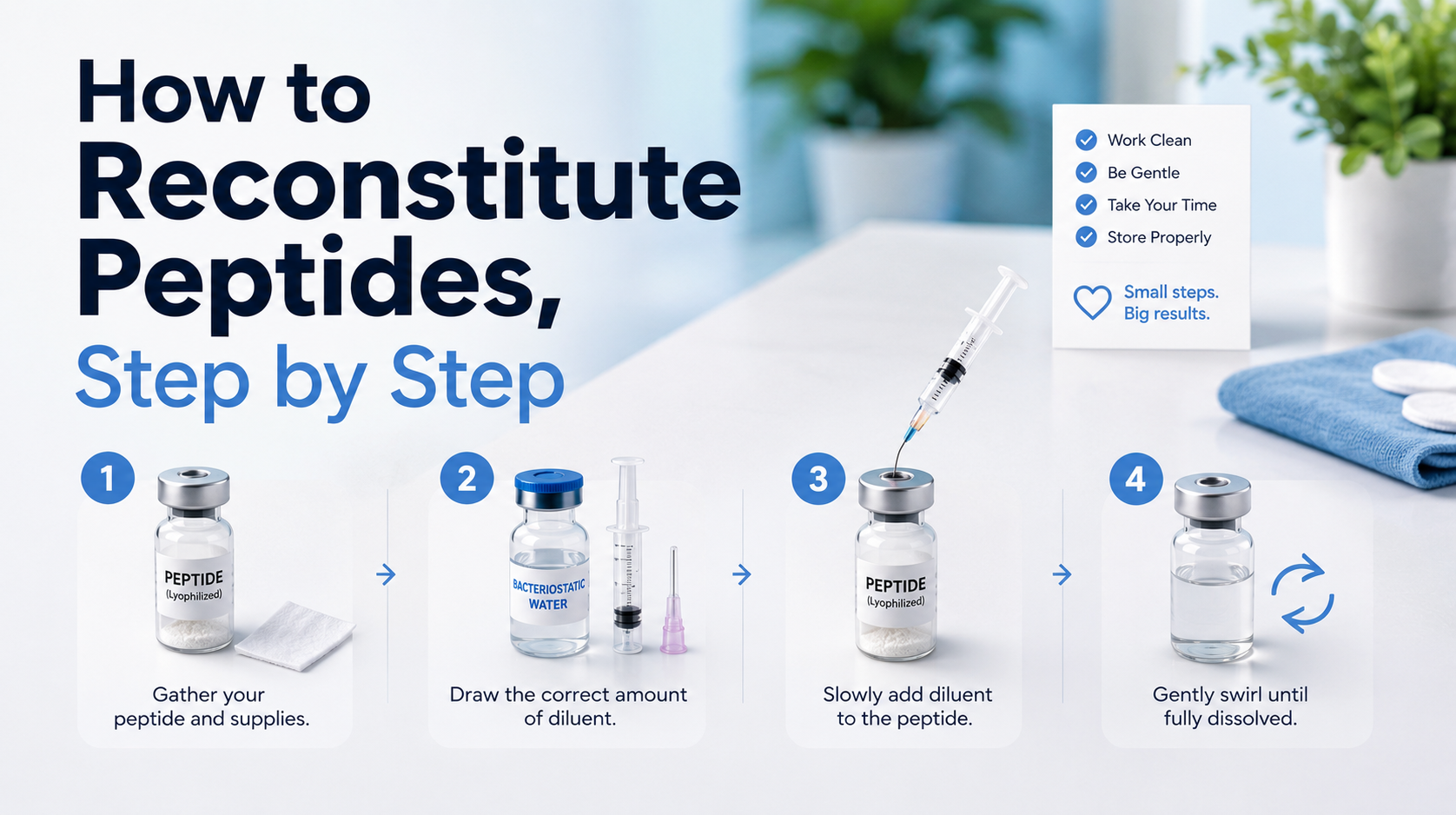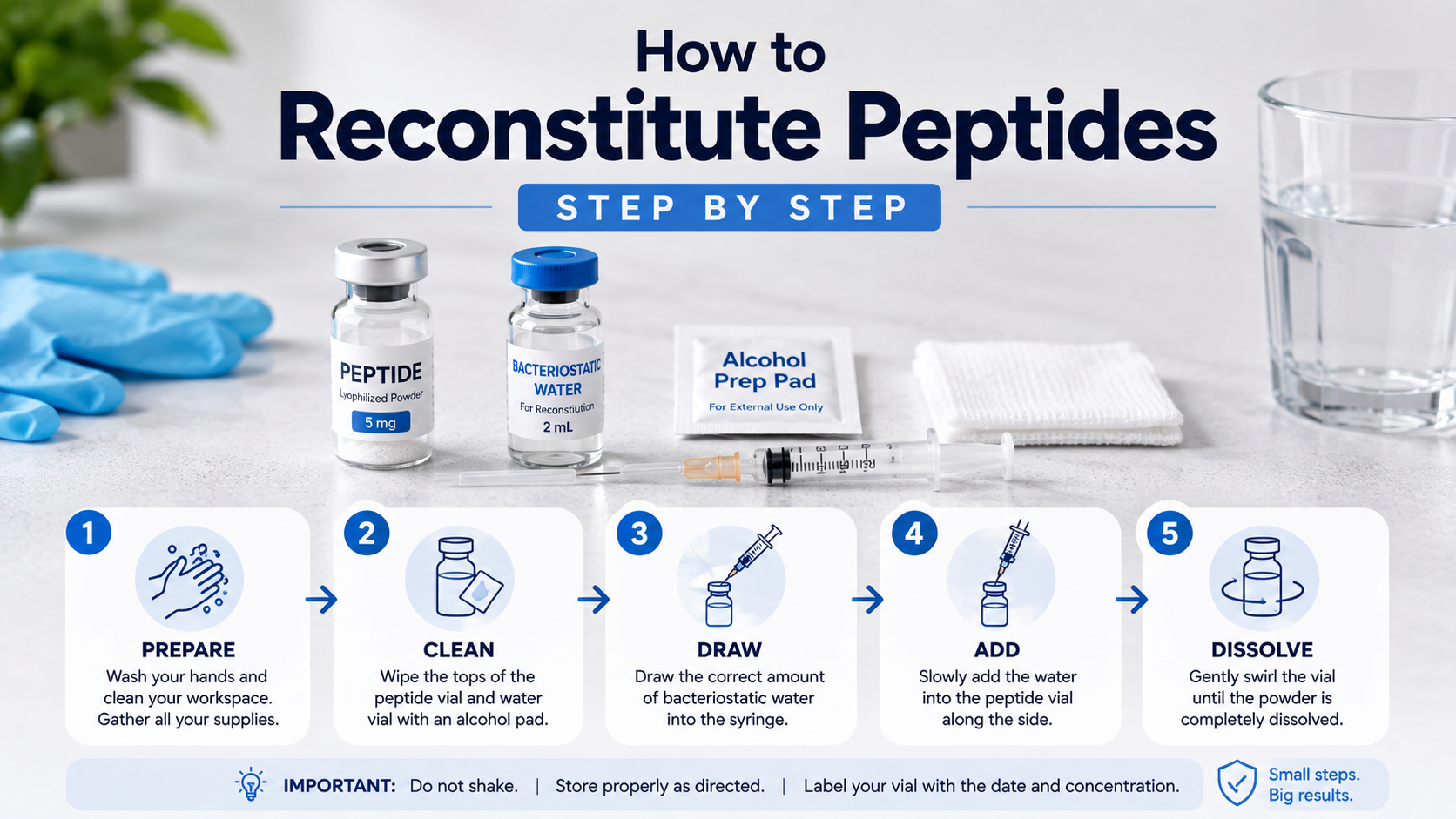
MK-677’s dosing story looks different from the peptides covered elsewhere in this series, mostly because it isn’t a peptide at all. As a small molecule taken orally, the way researchers measure, dose, and handle it in a study is genuinely different from how a freeze-dried peptide like BPC-157 or ipamorelin is prepared. This guide covers how dosing shows up in the published research, what handling an oral compound actually involves, how to store it, and a few common questions — written to explain the science in plain terms, not as instructions for using it on a person or animal.
Dosing in the Literature
MK-677 clinical studies have generally dosed it once daily by mouth — itself a meaningful research difference from injectable secretagogues that often require multiple daily doses.
- The most specific, well-documented example in the literature is a small sleep study that dosed MK-677 at 25 mg per day, taken at bedtime, and reported increases in REM sleep of roughly 20–50% depending on the age group studied.
- Other trials — covering areas like growth hormone deficiency, muscle mass, and recovery in older adults following hip fracture — have generally worked in a similar range, though the exact amount used varies by study, population, and what was being measured. Pediatric growth hormone research has typically used weight-based dosing rather than a single fixed adult amount.
- Because MK-677 remains an investigational new drug with no approved dosing label, none of these study doses amount to an established human dosing standard. Each one is specific to the trial design and population that used it, not a validated, general-purpose number the way an approved drug’s label would provide.
The takeaway: any figure cited online as “the MK-677 dose” is being extrapolated from a specific clinical trial, not drawn from a dosing standard that’s actually been established for general use. Any dose used in a research setting should be determined independently based on the specific study and protocol.
Handling an Oral Secretagogue
Because MK-677 is a small molecule rather than a peptide, handling it in a research setting looks meaningfully different from handling something like BPC-157 or ipamorelin:
- Form. MK-677 for research use is typically supplied as a raw powder or in pre-measured capsule form, rather than as a freeze-dried peptide requiring reconstitution.
- Measuring powder. An analytical or milligram-scale is generally used to measure powder accurately for a given protocol; measurements should be checked against the batch’s certificate of analysis rather than assumed.
- Preparing for animal studies. In preclinical research, MK-677 is often dissolved or suspended in a vehicle — water or another defined solvent — for oral gavage administration, rather than injected.
- No sterile injection technique required. Unlike peptide research material, there’s no reconstitution, needle, or sterile-injection step involved — a practical simplification, though accurate measurement and record-keeping matter just as much.
- Capsule verification. If working with pre-made capsules, it’s still worth confirming the stated dose per capsule against supplier documentation rather than taking the label at face value.
Storage and Stability
MK-677 is generally more chemically stable at room temperature than peptides are, since it isn’t a chain of amino acids that can denature the way a protein does. Even so, standard practice is still to store it in a cool, dry place, sealed, and away from direct light and moisture to preserve potency over time.
If dissolved into a solution for a specific study, stability depends heavily on the solvent and concentration used — treat any published stability window as specific to that protocol rather than a universal guarantee, and don’t assume it behaves like a peptide solution.
Powder and capsules should stay in their original, properly sealed packaging until needed, with any leftover material resealed promptly after each use to limit exposure to air and moisture.
Documentation still matters: checking the certificate of analysis for the specific batch is the main way to confirm what a sample actually contains, since MK-677 sold online varies significantly in purity given how unregulated that market is.
Common Questions
Is MK-677 the same as HGH (human growth hormone)?
No. MK-677 is a growth hormone secretagogue — it prompts the pituitary gland to release more of the body’s own growth hormone, rather than supplying growth hormone directly the way an injectable HGH product does.
Does MK-677 need to be “cycled”?
There’s no clinically established cycling protocol for MK-677 in the published research. Any on-and-off schedule discussed online is an anecdotal practice, not something drawn from the clinical trial literature.
Why is MK-677 taken orally when most other secretagogues are injected?
Because it’s a non-peptide small molecule, it survives digestion in a way peptides generally don’t — that’s the underlying chemistry that makes oral dosing possible in the first place.
Does the research support long-term daily use?
The longest published studies have run in the range of one to two years, mostly in older-adult populations. Even so, MK-677 still isn’t approved for any use, and questions about its longer-term effects — including on blood sugar and insulin sensitivity — remain incompletely answered.
Research Use Disclaimer
MK-677 is not approved by the FDA or any other health authority for any use, and it is not a drug, food, supplement, or cosmetic. It is banned in most competitive sports. Everything in this guide is meant for general educational purposes, based on what’s published in the available research literature. None of it is medical advice, a treatment plan, or instructions for using MK-677 on a person or animal.
Using MK-677 outside of a legitimate research setting isn’t something we support or recommend — the evidence needed to support a safe, established human dose simply isn’t there yet.